
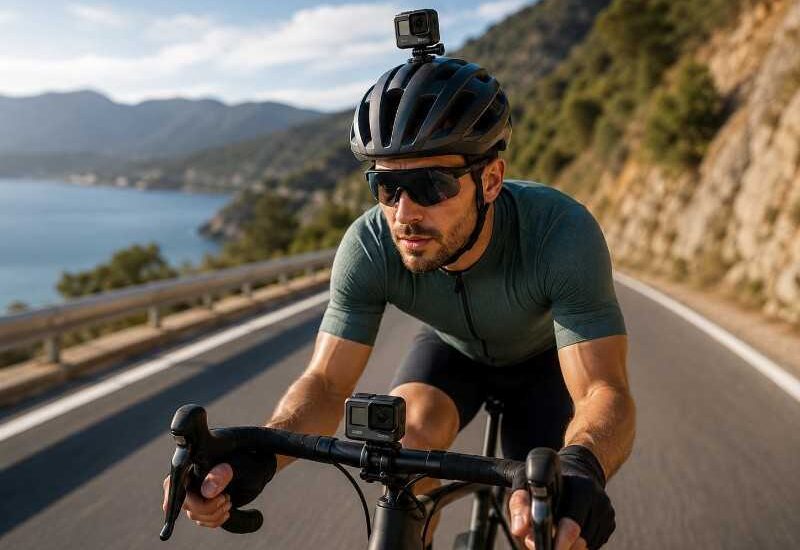
Bike cameras have become more than accessories for cyclists. In 2026, they are used for recording scenic rides, creating social media content, reviewing training routes, documenting road incidents, and supporting insurance claims after accidents.
Whether mounted on a helmet, handlebar, chest strap, seat post, or rear light system, the right bike camera can capture the road from the rider’s point of view and provide valuable footage when it matters most. For commuters, a bike camera can act like a dash cam. For mountain bikers and road cyclists, it can turn ordinary rides into high-quality video stories.
The best bike cameras in 2026 offer sharper video, stronger image stabilization, better battery life, wider mounting options, and smarter mobile apps. Some cameras are built for cinematic action footage, while others focus on safety, loop recording, or all-day reliability.
Why Cyclists Need a Bike Camera in 2026
Cyclists use cameras for different reasons. Some riders want to capture fast descents, gravel trails, city commutes, or weekend group rides. Others want video evidence in case of unsafe driving, collisions, close passes, or disputes after an incident.
A good cycling camera can record number plates, road conditions, traffic behavior, and the rider’s position on the road. This makes it useful not only for content creation but also for practical safety and insurance purposes.
For everyday riders, the most important features are clear video quality, reliable stabilization, strong mounting security, easy controls, and long enough battery life for the type of ride they usually complete.
Best Overall Bike Camera: DJI Osmo Nano
The DJI Osmo Nano is one of the strongest choices for cyclists who want a small, lightweight, and easy-to-mount camera. Its compact size makes it ideal for helmet and handlebar setups, especially for riders who do not want a bulky camera affecting comfort or balance.
The camera is designed for quick recording, smooth footage, and simple operation. For cyclists, that matters because there is often no time to adjust complicated settings while riding. A camera that can start recording quickly and stay stable on rough roads is more useful than one with advanced features that are difficult to access on the move.
The DJI Osmo Nano is a strong option for commuters, road cyclists, and casual riders who want reliable ride footage without carrying a large action camera.
Best Premium Bike Camera: GoPro Hero 13 Black
The GoPro Hero 13 Black remains one of the most capable action cameras for cyclists who want high-quality footage, excellent stabilization, and a strong accessory ecosystem. It is a particularly good choice for riders who want one camera that can work across cycling, travel, hiking, watersports, and general adventure filming.
For cycling, the Hero 13 Black performs well on handlebars, helmets, chest mounts, and seat posts. Its stabilization helps reduce shake from road vibration, gravel routes, and mountain bike trails. The wide field of view also helps capture more of the rider’s surroundings.
This camera is best suited for riders who care about image quality and editing flexibility. If you want to create polished cycling videos, record fast descents, or capture high-resolution ride footage, the GoPro Hero 13 Black is one of the best premium options in 2026.
Best 360-Degree Bike Camera: Insta360 X5
The Insta360 X5 is one of the best choices for cyclists who want to capture everything around them. A 360-degree camera records in all directions, allowing riders to reframe the footage later. This means you do not have to worry as much about pointing the camera in the perfect direction while riding.
For cyclists, this is a major advantage. The camera can capture the road ahead, traffic behind, scenery beside the rider, and group ride moments from one recording. It is especially useful for mountain biking, gravel riding, touring, and social media videos where creative angles matter.
A 360-degree camera is also useful for incident documentation because it can capture more of the surrounding environment than a standard forward-facing camera. However, riders should remember that 360-degree footage usually requires more editing time and larger storage capacity.
Best Helmet Camera for Cyclists: Insta360 Ace Pro 2
The Insta360 Ace Pro 2 is a strong option for helmet-mounted cycling footage. It offers sharp video, good stabilization, and a practical design for riders who want a direct point-of-view recording.
Helmet cameras are useful because they show where the rider is looking. This can make footage feel more natural and immersive. For commuters, helmet footage may also capture important details during traffic situations, including driver behavior, road signs, and the rider’s shoulder checks.
The Ace Pro 2 is ideal for riders who want high-quality POV footage from road rides, trails, city commutes, and bikepacking routes. It is also a good option for cyclists who want strong video performance without relying only on a handlebar-mounted camera.
Best Safety-Focused Bike Camera: Cycliq Fly12 Sport
The Cycliq Fly12 Sport is designed more like a cycling safety device than a traditional action camera. It combines a front-facing camera with a bike light, making it useful for commuters and road cyclists who want both visibility and recording in one unit.
For riders focused on insurance footage or road safety, the Fly12 Sport is one of the most practical options. It is built for continuous ride recording, and its design makes it easier to leave mounted on the bike compared with some action cameras.
This type of camera is especially useful for daily commuters, urban cyclists, and road riders who want evidence in case of a collision, close pass, or dispute. While it may not offer the same creative filming flexibility as a GoPro or Insta360 camera, it is very strong for practical cycling protection.
Best Budget Bike Camera: Akaso EK7000 Pro
The Akaso EK7000 Pro is a good budget-friendly choice for cyclists who want basic action camera features without spending premium money. It can record ride footage, mount to handlebars or helmets, and provide a simple entry point for riders new to bike cameras.
Budget cameras usually come with compromises. Stabilization may not be as smooth, low-light performance may be weaker, and the mobile app may not be as polished as premium brands. However, for casual cyclists who want to record occasional rides or test whether a bike camera is useful, the Akaso EK7000 Pro can be a reasonable starting point.
It is best for beginner users, occasional riders, and cyclists who want affordable footage rather than professional-quality video.
Helmet Camera vs Handlebar Camera: Which Is Better?
Helmet cameras and handlebar cameras both have advantages.
A helmet camera records what the rider sees. This makes it useful for traffic situations, shoulder checks, trail riding, and POV footage. However, helmet cameras can feel heavier during long rides, and some riders may not like mounting extra equipment on their helmet.
A handlebar camera is more stable, easier to mount, and better for forward-facing road footage. It works well for commuting, touring, and general cycling videos. However, it only records where the bike is pointing, not necessarily where the rider is looking.
For safety-focused cyclists, a front handlebar camera paired with a rear camera can provide stronger coverage. For content creators, a helmet camera or 360-degree camera may produce more engaging footage.
What to Look for in a Bike Camera
When choosing a bike camera in 2026, cyclists should focus on practical features rather than just the highest resolution.
Video quality is important, but stabilization matters just as much. Cycling creates constant vibration, especially on rough roads, gravel, and trails. A camera with weak stabilization can make footage difficult to watch.
Battery life is another key factor. Commuters may only need one hour of recording, while touring cyclists or long-distance riders may need several hours. Some cameras support external power banks, which can be useful for longer rides.
Mounting options also matter. A good bike camera should work with helmet mounts, handlebar mounts, chest mounts, seat post mounts, or magnetic mounts, depending on the rider’s needs.
For insurance purposes, loop recording is useful because it allows the camera to keep recording over older footage. Riders should also look for easy footage transfer, strong app support, waterproofing, and reliable storage card compatibility.
Best Bike Camera for Insurance Footage
For insurance and road incident footage, the best camera is not always the one with the highest video resolution. Reliability is more important. A safety-focused camera should be easy to start, securely mounted, weather-resistant, and capable of recording consistently.
The Cycliq Fly12 Sport is a strong choice for front-facing safety footage because it combines a light and camera in one device. Riders who want broader coverage may prefer pairing a front camera with a rear camera. A 360-degree camera can also be useful because it captures more of the surrounding scene.
For cyclists who ride in traffic regularly, a camera should be treated like a cycling dash cam. It should record clearly enough to show vehicles, road markings, traffic lights, and rider positioning.
Best Bike Camera for Adventure Footage
For adventure footage, GoPro and Insta360 cameras are the strongest choices. The GoPro Hero 13 Black is excellent for traditional action footage, while the Insta360 X5 is better for creative 360-degree videos and reframing after the ride.
Mountain bikers, gravel cyclists, and touring riders may benefit most from these cameras because they can capture dramatic scenery, fast movement, and changing terrain. Riders who want to post content on YouTube, Instagram, TikTok, or other platforms should also consider how easy the camera’s app makes editing and sharing footage.
The best bike camera in 2026 depends on how you ride.
For most cyclists, the DJI Osmo Nano offers a strong mix of compact design, usability, and reliable recording. For premium action footage, the GoPro Hero 13 Black remains one of the best choices. For creative 360-degree videos, the Insta360 X5 is the standout option. For helmet-mounted POV footage, the Insta360 Ace Pro 2 is a strong pick. For safety and insurance-focused riding, the Cycliq Fly12 Sport is one of the most practical cameras available.
Cyclists who ride daily may prefer a safety-first camera with loop recording and strong battery life. Riders who create content may want higher resolution, better stabilization, and flexible editing tools. The best choice is the camera that matches your riding style, your budget, and the type of footage you need most.
FAQ
What is the best bike camera for cyclists in 2026?
The best bike camera depends on how you ride. For most cyclists, a compact action camera with strong stabilization, clear video quality, waterproofing, and reliable mounting options is the best choice. Riders who want creative footage may prefer a 360-degree camera, while commuters may prefer a safety-focused front or rear bike camera.
Is a helmet camera or handlebar camera better for cycling?
A helmet camera is better for capturing what the rider sees, including shoulder checks, traffic movement, and trail direction. A handlebar camera is usually more stable and easier to mount, making it better for forward-facing road footage. Many cyclists use both for wider coverage.
Can bike camera footage be used for insurance claims?
Bike camera footage may help support an insurance claim by showing road conditions, vehicle movement, rider position, and what happened before or during an incident. However, acceptance depends on the insurer, local laws, and the quality of the footage.
What features should I look for in a bike camera?
Look for high-resolution video, strong image stabilization, good battery life, waterproof design, secure mounting, loop recording, wide-angle capture, and easy file transfer. For commuting, loop recording and reliability are especially important.
Are 360-degree cameras good for cycling?
Yes, 360-degree cameras are excellent for cyclists who want to capture everything around them. They are useful for scenic rides, group cycling, mountain biking, and incident footage because they record more than a standard front-facing camera.
How long should a bike camera battery last?
For short commutes, one to two hours of battery life may be enough. For longer rides, touring, or adventure cycling, look for a camera with extended battery support, replaceable batteries, or compatibility with an external power bank.
Do bike cameras work in rain?
Many bike cameras are water-resistant or waterproof, but protection varies by model. Cyclists should check the camera’s waterproof rating before riding in heavy rain or wet conditions.
Where should I mount a bike camera?
Common mounting positions include the helmet, handlebar, chest strap, seat post, and rear light mount. Helmet mounts are best for point-of-view footage, while handlebar and rear mounts are better for road evidence and continuous recording.
What is the best bike camera for commuting?
For commuting, choose a camera with loop recording, long battery life, clear number plate capture, waterproofing, and secure mounting. A front-facing safety camera or a front-and-rear camera setup is often the most practical choice.
Is a GoPro good for cycling?
Yes, GoPro cameras are popular among cyclists because they offer strong stabilization, high-quality video, wide mounting support, and durable designs. They are especially useful for road cycling, mountain biking, gravel riding, and adventure footage.