
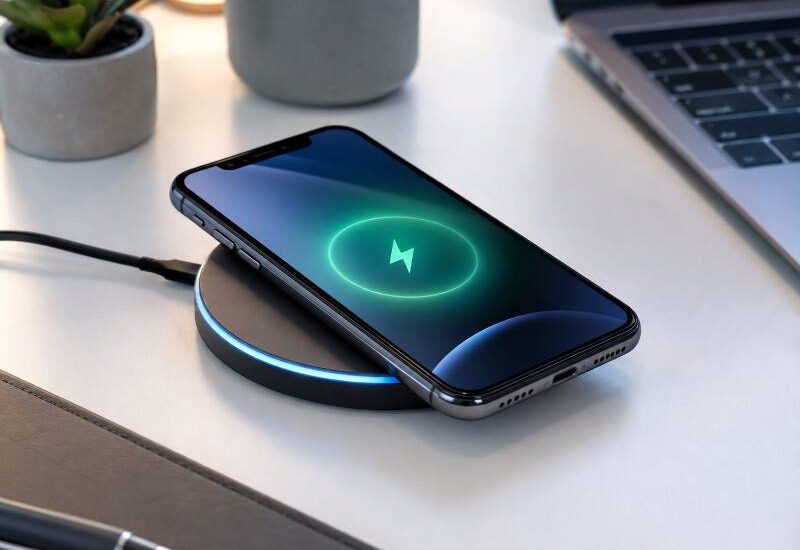
Wireless chargers for smartphones used to feel like a futuristic convenience—something you saw in concept videos, premium hotel rooms, or glossy product demos. Today, they have become a normal part of how many people power their devices. For users who want a cleaner desk or bedside setup, wireless charging stands make it easier to keep phones powered without constantly plugging and unplugging cables.
It is not magic. It is not always faster than a cable. And no, it does not completely remove wires from your life, because the charger itself still needs power. But wireless chargers solve a very real everyday problem: they make charging less annoying.
For smartphone users who charge throughout the day, work from a desk, travel often, or simply want a cleaner setup, wireless charging can be more than a small luxury. It can change how you interact with your phone.
Wireless Chargers Make Charging Effortless
The biggest benefit of wireless chargers is simple: convenience.
With a traditional charger, every charge starts with a small task. Find the cable. Pick up the phone. Plug it in. Make sure the connector is facing the right way. Check whether it is actually charging. Repeat this process multiple times a day, and it becomes one more tiny friction point in an already device-heavy routine.
Wireless charging removes most of that friction. You place your smartphone on a charging pad or stand, and the phone begins charging automatically. That makes it especially useful in places where your phone naturally sits: your desk, bedside table, kitchen counter, or office workstation.
This is where wireless charging quietly becomes practical. You do not have to think about charging as a separate task. You simply put your phone down where it already belongs.
They Help Reduce Cable Clutter
Cables are useful, but they are not pretty. A desk covered with charging cords, laptop wires, earbuds cables, and power adapters can quickly feel messy. Wireless chargers help clean up that space by creating one dedicated charging area.
A wireless charging stand can also double as a phone holder. Instead of leaving your phone flat on the desk or tangled in a cable, you can keep it upright where you can see notifications, calendar alerts, calls, or video meeting reminders.
This benefit is especially noticeable in workspaces. A clean desk setup is not just about looks. It can make your environment feel more organized and easier to use. For people who spend hours at a computer, a wireless charger can become part of a more intentional, less chaotic tech setup.
Wireless Charging Reduces Wear on Charging Ports
Every time you plug and unplug your phone, the charging port experiences physical contact. Over time, that port can collect dust, lint, and debris. Cables can also loosen, bend, or stop connecting properly. Anyone who has had to wiggle a charging cable to make it work knows the frustration.
Wireless charging reduces how often you use the phone’s charging port. That does not mean the port becomes useless; you may still need it for fast charging, data transfer, or emergency charging. But for routine daily use, wireless charging gives the port a break.
This is particularly helpful for people who charge their phones several times a day. Less plugging and unplugging can mean less physical wear on one of the most used parts of the device.
Wireless Chargers Are Easy for Everyone to Use
A good wireless charger is almost boringly simple. Place the phone on it. Watch the charging symbol appear. Done.
That simplicity matters. Wireless charging can be helpful for seniors, kids, busy professionals, and anyone who does not want to deal with tiny connectors. It also helps when charging in low light, such as at night beside the bed.
Wireless charging stands add another layer of usefulness. They keep the phone visible while it charges, making it easier to check the time, view incoming calls, follow a recipe, watch a video, or keep an eye on notifications without picking up the device.
It is not just charging. It is charging while the phone stays usable.
They Are Ideal for Offices and Workstations
The office is one of the best places to use a wireless charger. Most people place their phone beside their computer anyway. A wireless charging stand turns that habit into a charging routine.
Instead of letting the battery slowly drain during the workday, your phone can stay topped up while you answer emails, join meetings, or work on projects. You can pick it up when needed and place it back down without thinking about cables.
Wireless chargers also make sense in shared spaces. Meeting rooms, reception areas, and front desks can benefit from simple charging stations that look cleaner than loose charging cords. For businesses, this can create a more organized and modern environment.
Wireless Chargers Improve Bedside Charging
The bedside table is another place where wireless chargers shine.
Most people charge their phones overnight. With a wireless charger, there is no need to search for a cable beside the bed or deal with tangled cords in the dark. You place the phone on the charger before sleeping, and it is ready in the morning.
A wireless charging stand can also keep the screen visible for alarms, time, or sleep mode features. For people who use their phone as a bedside clock, this is more useful than leaving the phone flat on a table.
Of course, overnight charging should be done with a reliable charger. A quality wireless charger with temperature control and safety features is important, especially because wireless charging can generate heat if the phone and charger are not aligned properly.
Multi-Device Wireless Chargers Simplify Your Tech Setup
Many people no longer charge only one device. A typical daily setup may include a smartphone, wireless earbuds, and a smartwatch. That can mean three different cables, three adapters, and three separate charging spots.
Multi-device wireless charging stations solve this problem by creating one charging hub. A 2-in-1 or 3-in-1 wireless charger can power multiple devices in one place, depending on compatibility.
This is especially helpful for Apple, Samsung, and other ecosystem-heavy users who rely on several connected devices. Instead of spreading chargers across a desk or nightstand, everything can live in one organized station.
For families, multi-device wireless chargers can also reduce the “who took my cable?” problem. One charging area can support several devices without turning into a cable drawer disaster.
They Can Reduce Cable Damage and Replacement Costs
Charging cables have a rough life. They get bent, pulled, twisted, packed into bags, stepped on, and yanked from wall outlets. Over time, even good cables can fray or fail.
Wireless chargers stay in one place. That means less bending, less pulling, and less daily abuse. You still need a cable to power the wireless charger, but that cable usually remains stationary and protected.
For people who constantly replace damaged phone cables, this can be a practical advantage. A quality wireless charger may cost more upfront than a basic cable, but it can reduce reliance on cables that wear out quickly.
Wireless Charging Is Useful for Travel
Wireless charging is not always the first thing people pack, but it can be useful for travel, especially with compact pads, foldable chargers, or magnetic charging stands.
A portable wireless charger gives you a familiar charging setup in hotels, airports, guest rooms, or temporary workspaces. It can also reduce how many cables you need to carry if your devices support wireless charging.
Magnetic wireless chargers are particularly useful on the go because they help keep the phone aligned. That matters because poor alignment can slow charging or stop it entirely.
For frequent travelers, the best wireless charger is usually compact, lightweight, and compatible with the devices they actually carry. A bulky charging station may look nice at home but feel annoying in a travel bag.
Wireless Chargers Support Modern Smartphone Habits
Wireless charging fits the way people now use smartphones. Phones are no longer devices we charge once at night and ignore all day. They are cameras, wallets, maps, work tools, entertainment screens, and communication hubs.
That means battery anxiety is real. Wireless chargers help by making small, frequent charging sessions easier. You can top up your phone while working, eating, reading, or getting ready to leave.
This can improve charging habits. Instead of waiting until the battery is nearly dead, users can keep their phone charged throughout the day with less effort.
Wireless charging is not always about speed. Sometimes, it is about availability. The best charger is often the one you actually use.
Wireless Charging Can Be Safer When You Use Quality Accessories
Good wireless chargers often include safety features such as temperature control, foreign object detection, overcurrent protection, and automatic power regulation. These features help protect both the charger and the phone.
That said, not all wireless chargers are equal. Cheap, uncertified chargers may charge slowly, heat up more than expected, or fail to align properly with your device.
Before buying a wireless charger, check for compatibility with your smartphone. Many devices support Qi wireless charging, while some work best with magnetic wireless chargers. Charging speed also depends on the phone, charger, power adapter, and cable connected to the charger.
In other words, the wireless charger is only one part of the system. Buying a good one matters.
Wireless Chargers Are Not Perfect
Wireless charging has clear benefits, but it is not flawless.
It can be slower than wired fast charging. It may generate more heat. Thick phone cases, metal attachments, pop grips, or wallet cases can interfere with charging. And if the phone is not placed correctly, it may not charge at all.
There is also the obvious irony: wireless chargers still use wires. The phone does not need a cable, but the charging pad or stand still plugs into power.
So wireless charging is not a complete replacement for wired charging. It is better understood as a convenience upgrade. For maximum speed, a wired charger may still win. For daily ease, wireless charging often feels better.
What to Look for Before Buying a Wireless Charger
Before buying a wireless charger, check whether your smartphone supports wireless charging. Then look at the type of charger that fits your routine.
A charging pad is simple and usually compact. A charging stand is better for desks and bedside tables because it keeps the phone upright. A magnetic wireless charger helps with alignment and is useful for compatible phones. A multi-device station is best for users who also charge earbuds or a smartwatch.
Also consider charging speed, safety features, case compatibility, build quality, and whether the charger includes a power adapter. Some wireless chargers advertise high wattage but require a specific adapter to reach that speed.
A good wireless charger should be easy to use, stable, safe, and compatible with your device.
FAQs About Wireless Chargers for Smartphones
Are wireless chargers good for smartphones?
Yes. Wireless chargers are good for smartphones when used with compatible devices and reliable charging accessories. They make daily charging easier, reduce cable clutter, and help limit wear on the phone’s charging port.
Do wireless chargers charge slower than wired chargers?
In many cases, wireless chargers charge slower than wired fast chargers. However, many modern wireless chargers support faster charging speeds when paired with compatible smartphones, adapters, and cables.
Can wireless charging damage a phone battery?
Wireless charging should not damage a phone battery when you use a quality charger. The main thing to watch is heat. A reliable wireless charger with temperature control and proper alignment can help keep charging safer and more efficient.
Do wireless chargers work with phone cases?
Many wireless chargers work with slim phone cases. However, thick cases, metal plates, wallet cases, magnetic accessories, or pop grips may interfere with wireless charging. It is always best to check case and charger compatibility.
Is a wireless charger better than a wired charger?
A wireless charger is better for convenience, cleaner desk setups, bedside charging, and reducing cable use. A wired charger may still be better when you need the fastest possible charging speed.
What type of wireless charger should I buy?
The best wireless charger depends on how you use your phone. A charging pad is simple and compact. A charging stand is better for desks and nightstands. A magnetic charger helps with alignment. A multi-device charging station is useful if you also charge earbuds or a smartwatch.
Final Thoughts
Wireless chargers are not just about removing a cable. They are about removing a small daily hassle.
For smartphone users, the benefits are practical: easier charging, less clutter, reduced port wear, cleaner workspaces, better bedside setups, and more organized multi-device charging. Wireless charging may not always be the fastest option, but it is often the most convenient one.
And that is the real reason wireless chargers have become popular. They fit into daily life without demanding much attention. You put the phone down, it charges, and you move on.
In a world where nearly every device asks for power, that kind of simplicity matters.
FAQs About Wireless Chargers for Smartphones
Are wireless chargers good for smartphones?
Yes. Wireless chargers are good for smartphones when used with compatible devices and reliable charging accessories. They make daily charging easier, reduce cable clutter, and help limit wear on the phone’s charging port.
Do wireless chargers charge slower than wired chargers?
In many cases, wireless chargers charge slower than wired fast chargers. However, many modern wireless chargers support faster charging speeds when paired with compatible smartphones, adapters, and cables.
Can wireless charging damage a phone battery?
Wireless charging should not damage a phone battery when you use a quality charger. The main thing to watch is heat. A reliable wireless charger with temperature control and proper alignment can help keep charging safer and more efficient.
Do wireless chargers work with phone cases?
Many wireless chargers work with slim phone cases. However, thick cases, metal plates, wallet cases, magnetic accessories, or pop grips may interfere with wireless charging. It is always best to check case and charger compatibility.
Is a wireless charger better than a wired charger?
A wireless charger is better for convenience, cleaner desk setups, bedside charging, and reducing cable use. A wired charger may still be better when you need the fastest possible charging speed.
What type of wireless charger should I buy?
The best wireless charger depends on how you use your phone. A charging pad is simple and compact. A charging stand is better for desks and nightstands. A magnetic charger helps with alignment. A multi-device charging station is useful if you also charge earbuds or a smartwatch.